IRS tax relief blog
Tax Relief Guides
Published articles about IRS tax debt, notices, payment plans, Offer in Compromise, penalties, liens, levies, wage garnishment, unfiled returns, and Fresh Start options.

Penalty Abatement: First-Time Relief and Reasonable Cause
Penalty abatement may reduce certain IRS penalties if the taxpayer qualifies for first-time relief, reasonable cause, or another recognized basis.
Read guide
Bank Levy vs Wage Levy: What Is the Difference?
A bank levy reaches funds held by a financial institution, while a wage levy reaches ongoing pay. Both are serious IRS collection actions.
Read guide
Can the IRS Garnish Wages for Back Taxes?
The IRS can levy wages to collect tax debt after required notices and process. A wage levy can continue until released or resolved.
Read guide
What Documents Do You Need for IRS Tax Relief?
Documents help determine whether a taxpayer may fit a payment plan, offer in compromise, penalty relief request, or hardship status.
Read guide
IRS Fresh Start Program Requirements in 2026
Fresh Start is an umbrella for IRS resolution paths, not a single application. Compliance, ability to pay, and financial hardship shape which option may…
Read guide
How to Prepare for a Tax Relief Consultation
A useful tax relief consultation starts with documents: notices, tax years, balances, income, expenses, assets, and missing-return history.
Read guide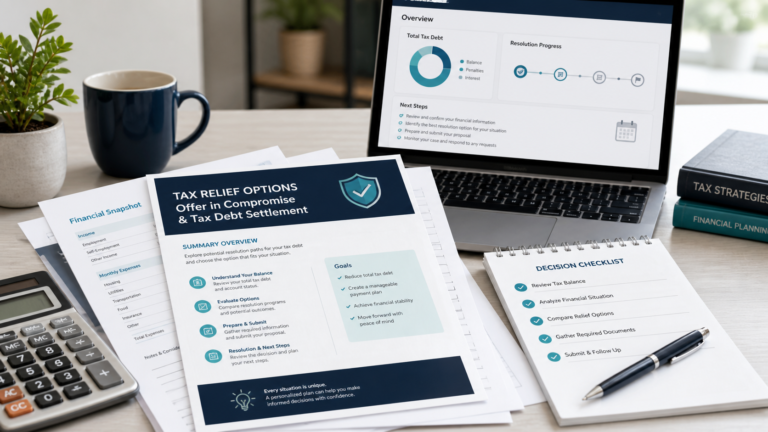
Offer in Compromise vs Payment Plan vs Currently Not Collectible
The best IRS resolution path depends on ability to pay. A payment plan is for paying over time, an offer is for possible settlement,…
Read guide
LT11 or Letter 1058: Notice of Intent to Levy
LT11 and Letter 1058 notices are urgent because they can involve levy action and hearing rights. Calendar the deadline and review appeal options immediately.
Read guide
CP504 Notice: What a Final Balance Due Warning Means
A CP504 notice can signal serious collection risk. It should be read carefully because it may warn about levy action and the need to…
Read guide
IRS Notice CP14: What to Do When the IRS Says You Owe
A CP14 notice usually means the IRS says there is a balance due. The first move is to verify the tax year, amount, payment…
Read guide